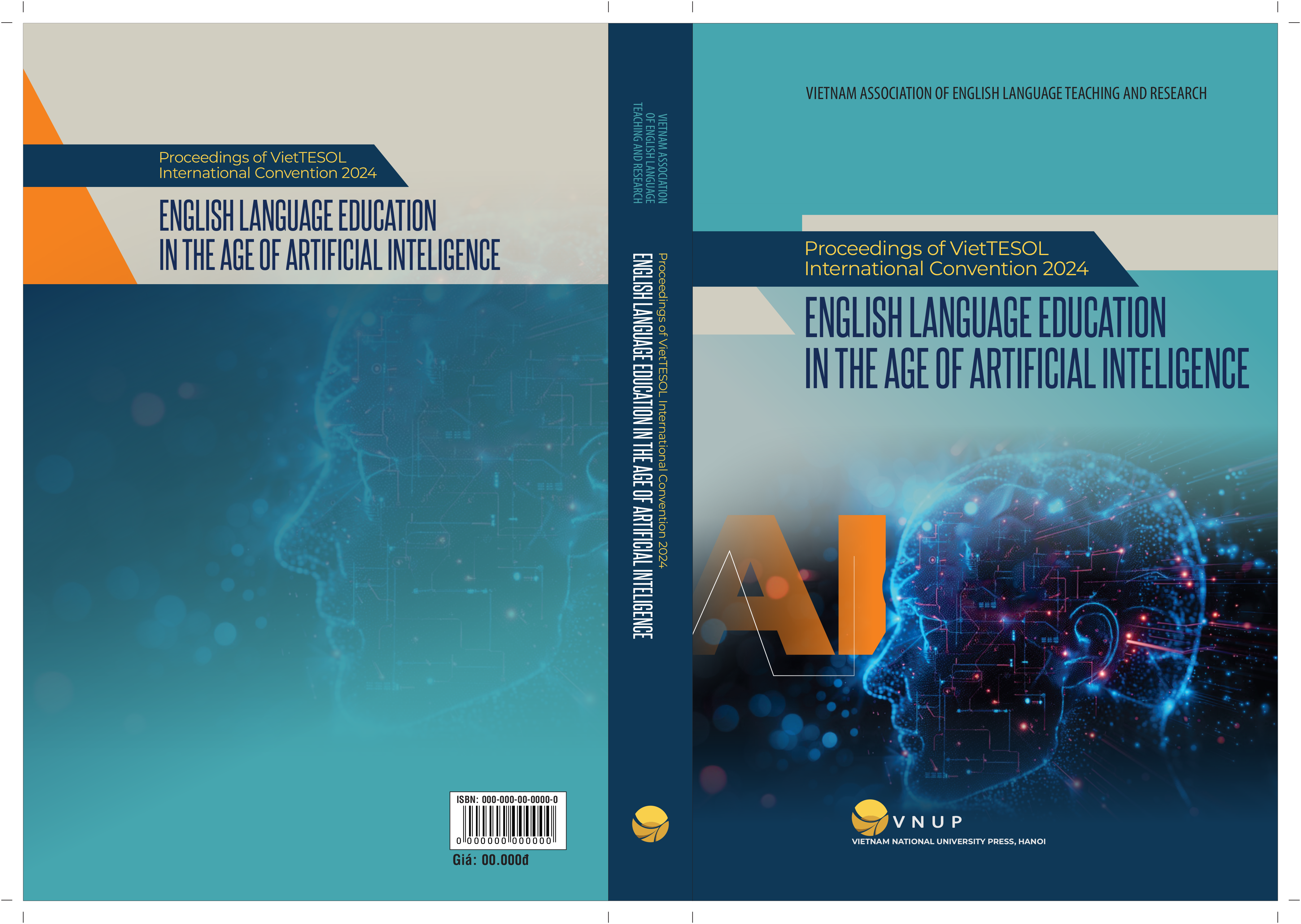
Vietnamese Transnational Higher Education Students’ Perceptions, Challenges, and Opportunities in Adopting AI to Improve Speaking Skills
Keywords:
English medium instruction, speaking skills, artificial intelligence, AIAbstract
This study aims to examine the students’ perspectives on the challenges and opportunities of using artificial intelligence (AI) in improving speaking abilities in transnational higher education (TNE) programs in Vietnam. The participants consisted of thirty English as a Foreign Language (EFL) students who were enrolled in three Transnational Education (TNE) programs at a public institution in Vietnam. The study employed a qualitative case study research design, using diaries and semi-structured interviews, to achieve its objectives. Thematic analysis was adopted to discover the emerging themes in the written diaries. Subsequently, semi-structured interviews were conducted with chosen students based on the identified themes. The findings revealed that Vietnamese students in the TNE program displayed a preference for utilizing AI tools to enhance their speaking skills due to limited teacher feedback. They were generally satisfied with using these AI tools to practice their English. The results also indicated that students encountered certain constraints when utilizing AI aids, including a lack of applicable feedback and few model examples. Furthermore, the participants had the perception that artificial intelligence is incapable of replacing teachers. Finally, the findings indicated a need to improve the available resources in AI products to facilitate the enhancement of students’ speaking abilities within the TNE context
Downloads
Published
Issue
Section
License
Copyright (c) 2025 VietTESOL International Convention Proceedings

This work is licensed under a Creative Commons Attribution-NonCommercial-NoDerivatives 4.0 International License.